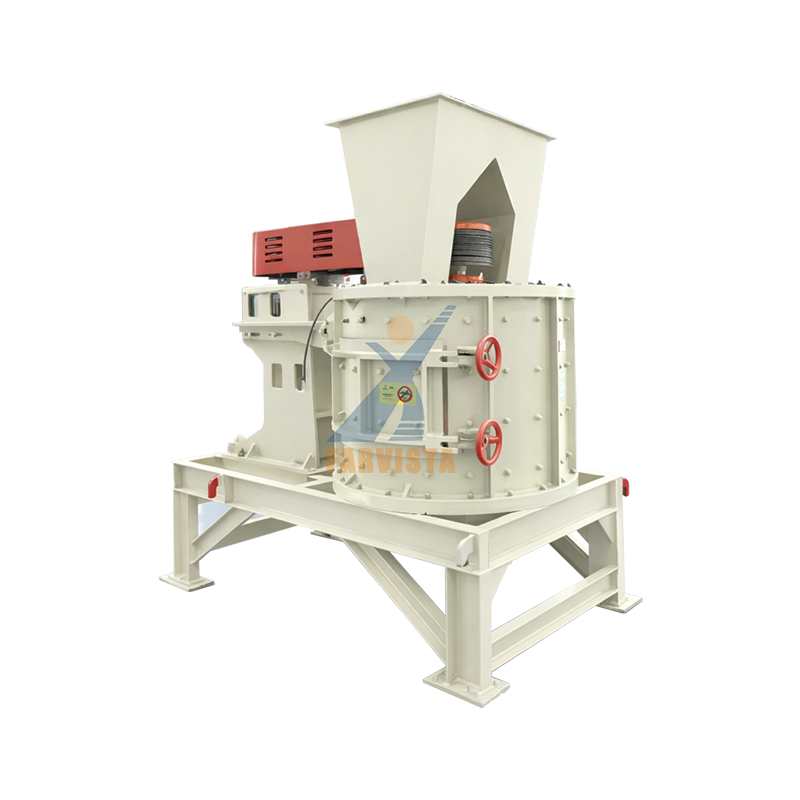
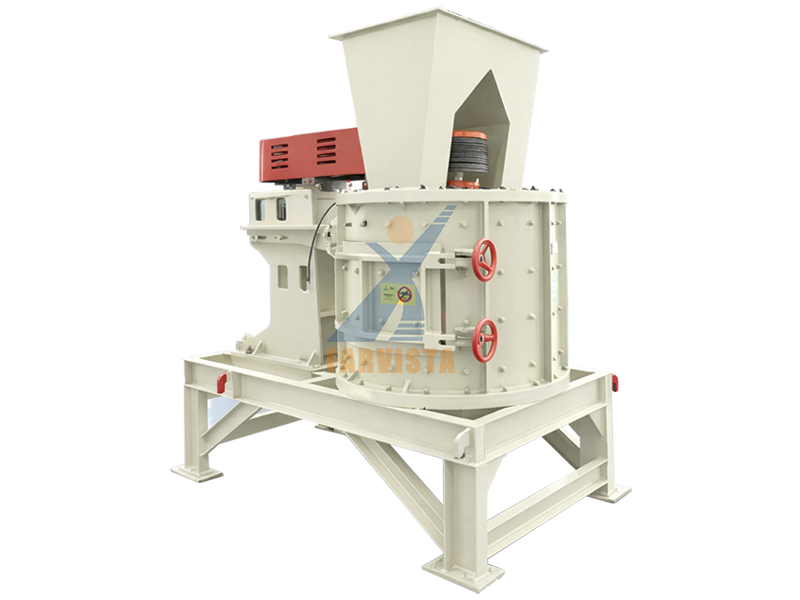
PFL Series Vertical Compound Crusher (Vertical Composite Fine Crushing Machine)
The PFL Series Vertical Compound Crusher combines hammer and impact crushing principles, offering high reduction ratio, compact design, adjustable output size, and cost-effective fine crushing for small and medium-sized plants.
The PFL Series Vertical Compound Crusher, also
known as a vertical composite crusher, is a high-efficiency fine crushing
machine that integrates the working principles of hammer crushing and impact crushing into a single compact
structure. It is designed to deliver high reduction ratios, stable performance,
and excellent cost efficiency, particularly for small and medium-sized crushing
projects where investment cost, footprint, and process simplicity are critical
considerations.
Through its unique
vertical rotor configuration, the PFL Series enables materials to undergo multiple crushing actions within a single machine,
including high-speed hammer impact, inter-particle collision, and grinding
against impact liners. This compound crushing mechanism significantly improves
fine crushing efficiency and makes the machine especially suitable for
processing medium to low hardness, brittle
materials.
The PFL Series is
commonly used as secondary or tertiary crushing
equipment, reducing feed sizes typically below 100 mm into fine products
in the 0–5 mm range. It is also frequently applied as a small-scale sand making
unit or as a pre-grinding machine before milling processes.
Working Principle
The PFL Series
Vertical Compound Crusher adopts a vertical
shaft design with centrally fed material. Raw material enters the
machine from the top and falls into the crushing chamber, where it is
immediately subjected to the action of a vertically mounted high-speed rotor.
The rotor is
equipped with multiple rows and layers of hammer heads hinged to the rotor
discs. During rotation, centrifugal force causes the hammer heads to extend
outward radially. As material contacts the hammer heads, it is crushed by
strong impact forces and thrown against the surrounding impact liners mounted
along the inner wall of the cylindrical housing.
Inside the crushing
chamber, material follows a vortex-like movement
path, repeatedly colliding with hammer heads, liners, and other
particles. This multi-stage crushing process—combining impact, collision, and
grinding—continues until the material reaches the required size and exits the
crusher by gravity through the discharge zone.
Product size can be
adjusted by regulating the gap between the hammer heads and the circumferential
impact liners, providing flexible control over final output fineness.
Main Structural Components
Vertical Cylindrical Frame The main structural body of the machine, fabricated from welded steel
plates and lined internally with wear-resistant liners to withstand continuous
impact and abrasion.
Vertical Rotor Assembly The core working component, consisting of a vertical main shaft, rotor
discs, hammer shafts, and multiple rows of hammer heads. The rotor is
dynamically balanced to ensure stable operation at high rotational speeds.
Hammer Heads Hinged wear components mounted on the rotor, responsible for the primary
impact crushing of incoming material. Multiple layers increase crushing
frequency and efficiency.
Impact Liners Adjustable liners installed circumferentially along the inner wall of
the housing. These liners form a high-efficiency crushing chamber together with
the hammer heads and allow output size control.
Vortex Crushing Chamber A specially designed internal space that promotes material circulation
and repeated crushing, improving fine crushing efficiency and reducing
oversized particles.
Drive and Lubrication System The vertical shaft is driven by an electric motor via belt transmission
or direct coupling. A dedicated lubrication system ensures reliable operation
of the upper bearing under demanding conditions.
Adjustment Mechanism Allows precise regulation of the clearance between hammer heads and
impact liners, enabling flexible control of product size.
Application Industries
The PFL Series
Vertical Compound Crusher is primarily intended for small and medium-sized fine crushing projects, particularly where
space and investment budgets are limited.
Sand and Aggregate Industry Fine crushing of limestone, bluestone, and similar materials in small
aggregate plants, producing manufactured sand or fine aggregates.
Building Materials and Ceramics Industry Crushing of clay, shale, coal gangue, and other raw materials used in
brick, tile, and ceramic production.
Chemical and Metallurgical Industry Processing of coke, dolomite, fluorite, and other medium to low hardness
industrial materials.
Mining Auxiliary Operations Fine crushing of non-metallic ores or as an auxiliary fine crusher in
small-scale mining applications.
Applicable Materials
The PFL Series
Vertical Compound Crusher is suitable for medium
to low hardness, brittle, and non-sticky materials, including:
Limestone
Marl
Gypsum
Coal
Coke
It is not recommended for high hardness materials
such as granite or basalt, nor for materials with high abrasiveness or strong
stickiness, as these conditions may cause excessive wear or unstable operation.
Performance Advantages
Low Investment Cost and High Cost Performance Compared with cone crushers of similar capacity, the PFL Series features
a simpler structure and significantly lower purchase cost. The absence of grate
bars reduces maintenance complexity compared with traditional hammer crushers.
High Reduction Ratio with Adjustable Output Size Compound crushing action enables reduction ratios exceeding 30:1. Output
fineness can be adjusted by regulating liner clearance or selecting appropriate
hammer configurations.
Compact Structure and Small Footprint The vertical layout minimizes installation space requirements, making it
ideal for sites with limited available area.
Stable Operation with Relatively Low Energy
Consumption A higher proportion of inter-particle crushing improves energy
utilization compared with conventional hammer crushers.
Improved Tolerance to Moist Materials The grate-free design reduces the risk of blockage when processing
materials with slightly higher moisture content.