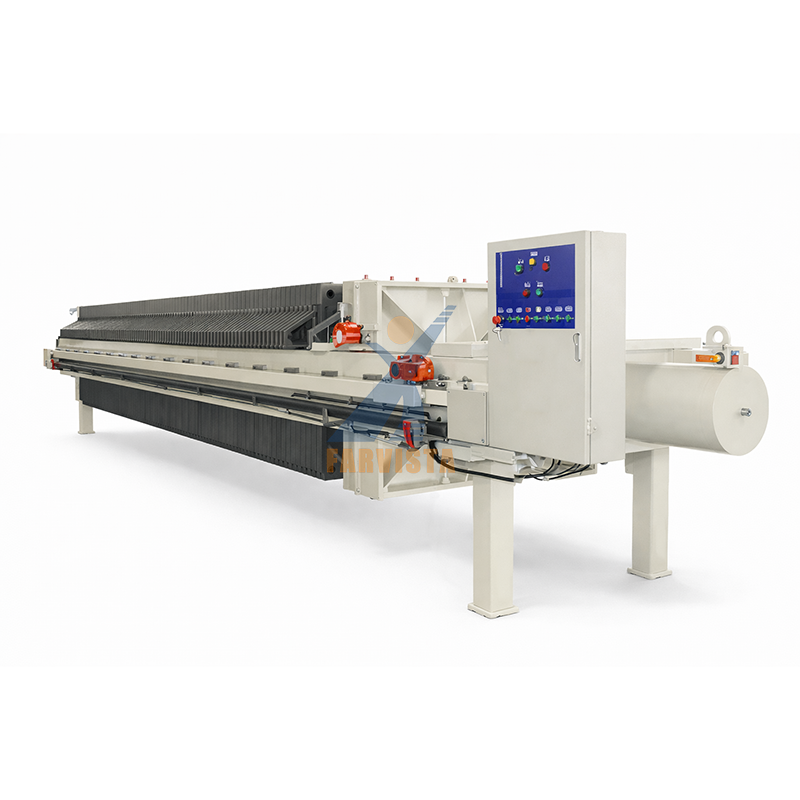
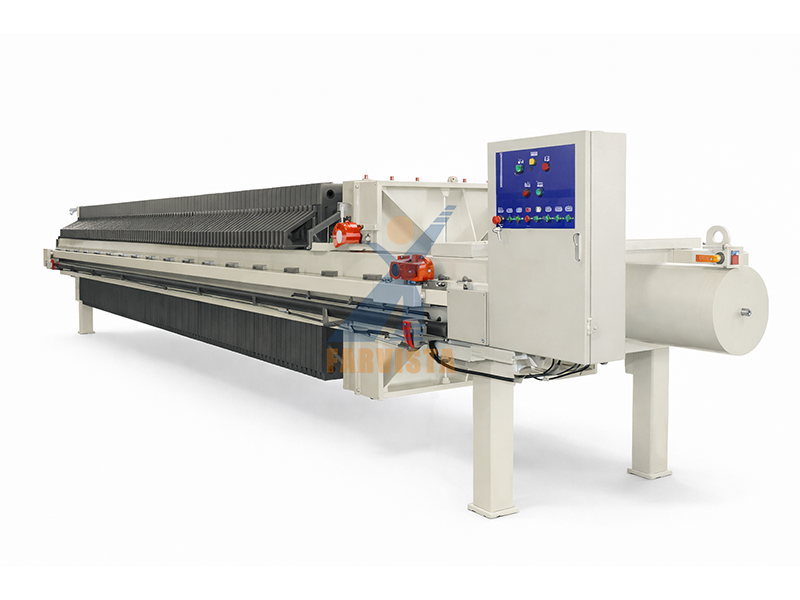
G Series Chamber Filter Press & GYM High-Pressure Membrane Chamber Filter Press
High-efficiency chamber and membrane filter press solutions delivering ultra-low cake moisture, high filtration pressure, stable operation, and wide material adaptability for mining, chemical, and environmental applications.
The G Series Chamber Filter Press and GYM High-Pressure Membrane Chamber Filter Pressrepresent two proven solid–liquid separation solutions designed to meet
different levels of dewatering efficiency, operational intensity, and
investment requirements across mining, metallurgy, chemical processing, and
environmental protection industries.
While both models
are based on the classical plate-and-frame filtration principle, they differ
significantly in dewatering depth, cycle efficiency, and energy utilization.
Together, they form a flexible filtration product portfolio capable of covering
basic filtration demands as well as advanced deep-dewatering applications under
increasingly stringent environmental and cost-control standards.
G Series Chamber Filter Press
The G Series Chamber Filter Press is a time-tested
intermittent solid–liquid separation system known for its high filtration pressure, low cake moisture, robust
structure, and reliable operation. It operates by forming sealed filter
chambers between adjacent filter plates. Slurry is pumped into the chambers
under high pressure, where solid particles are retained on the filter cloth to
form a compact filter cake, while the filtrate passes through the cloth and
drainage channels for collection.
As a fundamental yet
highly reliable dewatering solution, the chamber filter press has been widely
adopted in mining, chemical, and environmental industries for decades. It is
especially suitable for applications requiring relatively dry filter cakes while
maintaining controlled capital investment and straightforward maintenance.
Key characteristics
of the G Series Chamber Filter Press include:
High mechanical
strength frame structure ensuring stable long-term operation
High filtration
pressure resulting in dense filter cakes
Simple operating
principle with proven reliability
Strong adaptability
to different slurry concentrations and particle sizes
Low maintenance cost
and excellent spare-part interchangeability
GYM High-Pressure Membrane Chamber Filter Press
The GYM High-Pressure Membrane Chamber Filter Pressis an advanced evolution of the traditional chamber filter press, often
regarded as a deep dewatering specialist.
It integrates flexible membrane filter plates into the standard filtration
process, enabling a secondary high-pressure squeezing stage after initial
filtration.
Following the
conventional filtration phase, high-pressure water or compressed air is
introduced into the membrane cavity behind the elastic diaphragm. The membrane
expands uniformly, applying additional pressure directly onto the filter cake.
This secondary compression effectively removes capillary and bound water that
cannot be eliminated through filtration alone.
As a result, the
membrane filter press achieves:
Significantly lower
cake moisture content
Shorter filtration
cycles
Higher throughput
per unit time
Reduced washing and
drying energy consumption
This technology is
particularly advantageous for fine-grained, sticky, or difficult-to-dewater
materials and is widely used in modern tailings management, sludge
minimization, and high-value product recovery processes.
Structural Configuration
Common Structure (G Series)
Frame Assembly: Includes head plate, tail
plate, main beams, and hydraulic cylinder, providing stable closing force.
Suitable for
high-solids slurries, low-compressibility particles, and applications requiring
dry filter cakes. The membrane version shows exceptional performance
improvement for fine, sticky, and difficult-to-dewater materials.
Performance Advantages
G Series Chamber Filter Press
Simple and durable structure: Mature technology
with low failure rate
Lower initial investment: Cost-effective
solution for standard dewatering
Flexible operation: Adjustable cycle time and
optional air blowing
High cake solids content: Superior to vacuum
filtration systems
GYM High-Pressure Membrane Chamber Filter Press
Ultra-low cake moisture: Typically 10–30% lower
than conventional chamber presses
Shorter cycle time: 30–50% reduction in
filtration cycle
Energy-efficient operation: Reduced washing,
blowing, and drying energy demand
High automation level: Easily integrated into
fully automatic filtration systems
Conclusion
The G Series Chamber Filter Press provides a
reliable and economical solution for conventional solid–liquid separation,
while the GYM High-Pressure Membrane Chamber
Filter Press offers advanced deep-dewatering capabilities for
applications demanding maximum efficiency, lower operating costs, and stricter
environmental compliance.
Together, they
enable users to select the optimal filtration technology based on material
characteristics, production targets, and long-term operational strategy.