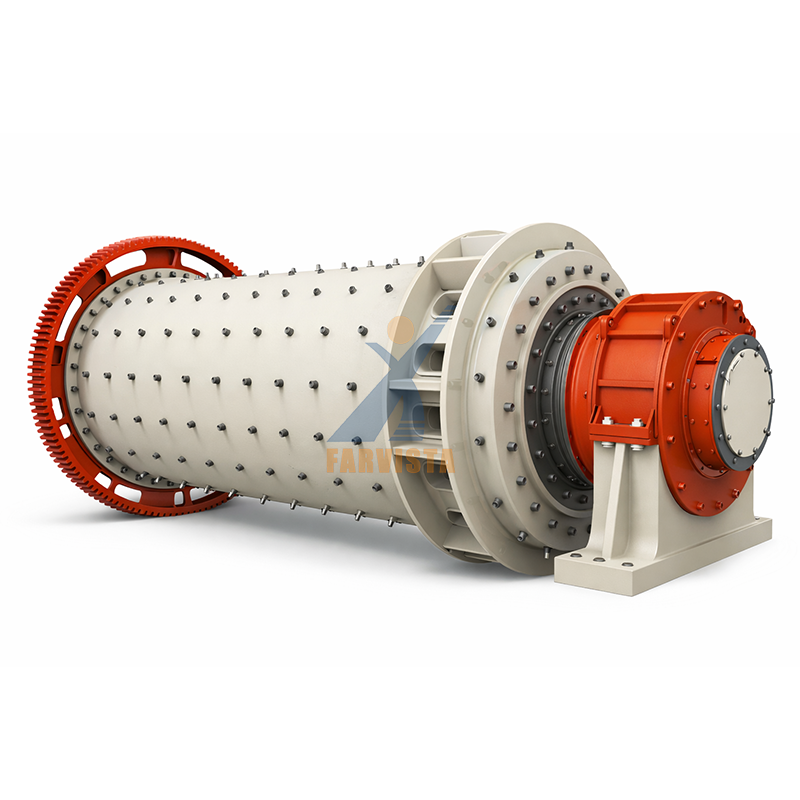
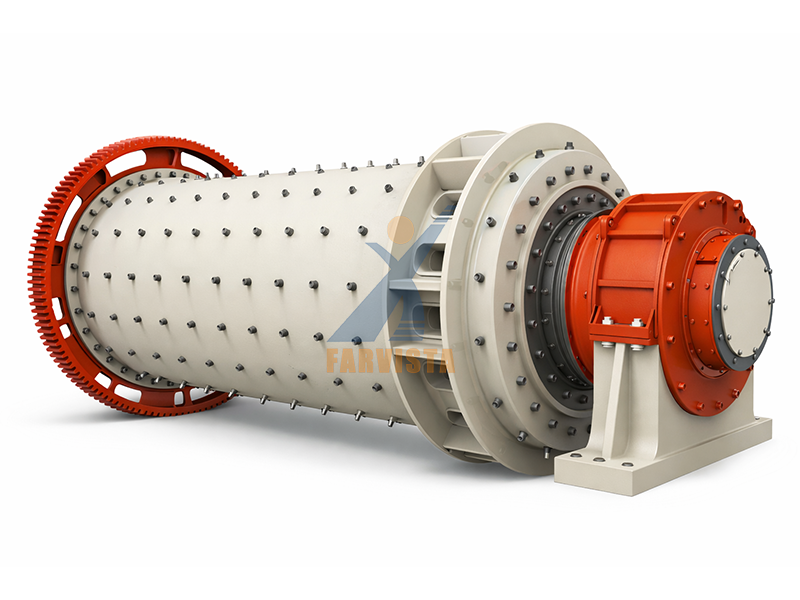
FMBZ Series Rod Mill for Coarse Grinding and Gravity Separation
The FMBZ Series Rod Mill features rolling bearing support, low energy consumption, uniform product size, and minimal over-grinding, making it ideal for coarse grinding and gravity separation processes.
The FMBZ Series Rod Mill is a new-generation
high-efficiency and energy-saving grinding equipment developed by our company
through structural optimization of traditional rod mills. By replacing
conventional alloy bearing bush support with advanced rolling bearing support, the FMBZ Series significantly reduces
operating resistance, lowers energy consumption, and improves overall
processing capacity.
Rod mills are widely
recognized for their unique grinding characteristics, particularly in
applications where uniform particle size,low over-grinding rate, and protection of valuable mineral crystals are
critical. The FMBZ Series is designed specifically for coarse grinding of brittle and friable materials, as well as for
process flows that require a narrow particle size distribution without
oversized particles. It is a classic and proven solution for gravity separation
plants and primary open-circuit grinding systems.
Working Principle
The FMBZ Series Rod
Mill operates through the rotation of a cylindrical shell containing steel rods
as the grinding media. As the shell rotates at a speed slightly lower than the
critical speed, the rods are lifted and then cascade and roll along the longitudinal
direction of the mill.
Unlike ball mills,
where grinding media impact and tumble in multiple directions, the steel rods
in a rod mill are arranged parallel to the mill
axis, producing a line-contact grinding
mechanism. This grinding mode promotes selective breakage of coarse
particles while minimizing excessive grinding of already qualified fine
material. As a result, the rod mill delivers a more uniform product size with
significantly reduced fines.
Main Structural Components
Mill Shell (Cylinder)
The shell is a
rotating cylindrical structure with a relatively large length-to-diameter ratio
(L/D), typically ranging from 1.5 to 2.5.
It is fabricated from rolled steel plates and reinforced to withstand
continuous grinding loads. The inner surface is lined with lifting liners and
end liners to protect the shell and assist in lifting the steel rods.
Feed End and Discharge End Covers
The feed and
discharge end covers connect the shell to the main bearing system and play a
critical role in material flow. The discharge configuration is a defining
feature of rod mills:
Overflow Discharge Type: Material exits freely
through the hollow discharge trunnion by gravity overflow.
Open-End (Low-Level) Discharge Type: A special
grate structure maintains a lower slurry level, allowing qualified material to
be discharged quickly, reducing over-grinding and improving product uniformity.
Main Bearing System
The main bearing
supports the entire rotating assembly. The FMBZ Series can be equipped with sliding bearings or advanced rolling bearings,
with rolling bearing support offering lower friction losses, reduced
lubrication requirements, and improved energy efficiency.
Drive System
The drive system
consists of an electric motor, reducer, pinion gear, and girth gear. It drives
the mill shell to rotate smoothly at a controlled speed below the critical
speed, ensuring stable operation and effective grinding performance.
Grinding Media – Steel Rods
Steel rods are the
core grinding media. Their length is slightly shorter than the effective length
of the mill shell, allowing free axial movement without entanglement. The rods
are arranged parallel inside the mill, and their diameter and material are selected
based on feed size, material hardness, and desired product size.
Application Industries
Rod mills play an
irreplaceable role in specific grinding circuits where controlled particle size
and low fines are essential.
Mineral Processing Industry (Especially Gravity
Separation)
Rod mills are the
classic choice for grinding brittle ores such as tungsten and tin ores. In
gravity separation circuits, protecting the natural crystal structure of
valuable minerals is critical, and excessive fines can lead to metal loss. Rod
mills provide the ideal grinding solution in these applications.
Non-Ferrous Metal Ores
Used for primary
coarse grinding of gold, lead, zinc, and other non-ferrous metal ores,
supplying qualified feed material for subsequent flotation or cyanidation
processes.
Chemical and Building Materials Industries
Applied in dry or
wet grinding of quartz sand, feldspar, ceramic raw materials, and similar
materials where iron contamination is not strictly limited.
Sand Making (Special Applications)
In certain
processes, rod mills can be used for artificial sand production, offering
relatively good particle shape. However, their efficiency and economy are
generally lower compared to vertical shaft impact crushers.
Applicable Materials
The FMBZ Series Rod
Mill is suitable for medium to low hardness
brittle materials. It is not recommended for materials with high
toughness, strong viscosity, or extremely high hardness, where rod entanglement
or inefficient grinding may occur.
Performance Advantages
High Capacity and Low Energy Consumption
The use of rolling
bearing support significantly reduces mechanical resistance compared to
traditional alloy bearing bush designs, resulting in lower power consumption
and higher throughput.
Uniform Product Size with Low Over-Grinding Rate
The selective
grinding mechanism of steel rods effectively protects fine particles once they
reach the target size, producing a concentrated particle size distribution
ideal for gravity separation and chemical leaching processes.
Potential Replacement for Fine Crushing Equipment
In certain process
flows, adjusting the discharge size of the rod mill can eliminate the need for
an additional fine crushing stage, simplifying the overall process layout.
Stable Operation and Lower Noise Level
Compared with ball
mills, the cascading and rolling motion of steel rods generates less impact,
resulting in reduced vibration and lower operating noise.
Reduced Risk of Slurry Accumulation and Blockage
The gaps between
steel rods facilitate slurry flow, making rod mills less prone to clogging or
“swelling” when processing materials with higher moisture content.